Die Ökonomie der
Entschleunigung: Das „Howgozit“ als kybernetisches Kontrollinstrument
des John Cage Orgelprojekts in Halberstadt
In der aviatischen Praxis dient das sogenannte „Howgozit“ – eine pragmatische Verballhornung der Frage „How goes it?“ – als präzises, kontinuierlich fortgeschriebenes Protokollinstrument.
Am historischen Beispiel des Flugs LH 404 vom 12. August 2005 manifestiert sich dessen Funktion exemplarisch: Beim Überfliegen des Koordinatenpunktes 58N40W verzeichnete das Protokoll eine verspätungsbedingte Abweichung von vier Minuten im Gegenwind, bilanzierte jedoch zeitgleich einen beruhigenden Treibstoffüberschuss von 8,3 Tonnen. Diese Verschränkung von Soll-Leistung, Ist-Zustand und verbleibenden Ressourcen lässt sich auf profunde Weise in den kunsttheoretischen Diskurs über translationale Langzeitprojekte übertragen.
Wenn die John Cage Orgelstiftung im Rahmen ihrer komplementären Editionen „8m65“ und „JUST A SECOND“ über einen monumentalen Zeitraum von 628 Jahren hinweg eine Gesamtmenge von 379.775 Arbeiten (8m65) respektive 303.83 Arbeiten (JUST A SECOND) veräußern will, mutiert die logistische Kontrolle zur kunsthistorischen Notwendigkeit. Um eine totale Verwertung bis zum finalen Akkordwechsel im Jahr 2640 zu garantieren und das spekulativ-materielle Überbleibsel von Artefakten zu verhindern, empfiehlt sich die Etablierung eines ebensolchen „Howgozit“ für den Kunstbetrieb. Es fungiert hierbei als kulturökonomisches Navigationsinstrument, das den akkumulierten Absatz im Verhältnis zur verbleibenden Epochenzeit spiegelt.
Gleichzeitig erlaubt dieses System die exakte Fortschreibung des hypothetischen Kapitalzuflusses. Um die inhärente Volatilität künftiger Währungssysteme und unweigerliche Inflationszyklen bis zum 27. Jahrhundert historiographisch zu neutralisieren, operiert das kunstspezifische „Howgozit“ mit einer konstanten, wertstabilen Bezugsgröße:
•
• Der Kaufpreis für Arbeiten aus „8m65“ wird an den Realwert eines Laibs Brot gekoppelt ( 5,-€ ).
• Die Edition „JUST A SECOND“ bemisst sich unveränderlich am 2,5-fachen Wert eines Sponsor-Tickets ( 500,-€ ) für den Klangwechsel 2026.
•
Durch diese Verankerung in anthropologischen und institutionellen Konstanten bildet das „Howgozit“ den realen, gegenwärtigen Kaufwert über Jahrhunderte hinweg immanent ab und transformiert administrative Ökonomie in einen integralen Bestandteil der performativen Konzeptkunst.

The Economy of Deceleration: The “Howgozit” as a Cybernetic Control Instrument in the Spirit of John Cage
In aviation practice, the so-called “Howgozit”—a pragmatic corruption of the phrase “How goes it?”—serves as a precise, continuously updated flight progress log. The historical example of flight LH 404 on August 12, 2005, illustrates this function perfectly: upon crossing the coordinate point 58N40W, the log recorded a four-minute delay due to headwinds, while simultaneously balancing a reassuring fuel surplus of 8.3 tons.
This intersection of target performance, actual status, and remaining resources can be deeply translated into the art-theoretical discourse on translational long-term projects, bridging the gap to the aesthetics of John Cage.
Cage’s oeuvre, particularly his organ project ORGAN²/ASLSP (As Slow as Possible) in Halberstadt, planned to span 639 years, radicalizes the concept of temporal expansion. Time here is not a rigid cage, but an unfolding space. When the John Cage Organ Foundation intends to sell a monumental total of 379,775 works for “8m65” and 30,383 works for “JUST A SECOND” over a grand epoch of 628 years, logistical management mutates into a performative act itself.
Here, Cage’s concept of controlled chance (aleatoric composition) meets the necessity of a structural score: to guarantee a complete realization by the final chord change in the year 2640 and prevent any unsold artifacts from remaining, the “Howgozit” functions as the economic equivalent to Cage’s time-structures.
It does not measure commercial success, but rather the flow of the project through the currents of the centuries. It monitors how sales align with the master plan—entirely in line with Cage’s conviction that the process is inherently more vital than the static result.
Simultaneously, this system allows for the precise tracking of hypothetical capital inflow by translating volatile economic parameters into artistic constants. To neutralize the inherent volatility of future monetary systems and inevitable inflationary cycles until the 27th century, the system operates with everyday, tangible benchmarks—a method strongly reminiscent of Cage’s integration of the mundane into high art:
• The purchase price for works from “8m65” is tethered to the real value of a loaf of bread ( 5,-€ ).
• The “JUST A SECOND” edition is invariably measured against 2.5 times the price of a sponsor ticket ( 500,-€ ) for the chord change 2026.
By anchoring itself to these anthropological and institutional constants, the “Howgozit” maps the real, present purchasing value across centuries. It liberates commercial transactions from speculative market noise, transforming administrative economy into an integral, participatory component of Cagean conceptual art.
In der aviatischen Praxis dient das sogenannte „Howgozit“ – eine pragmatische Verballhornung der Frage „How goes it?“ – als präzises, kontinuierlich fortgeschriebenes Protokollinstrument.
Am historischen Beispiel des Flugs LH 404 vom 12. August 2005 manifestiert sich dessen Funktion exemplarisch: Beim Überfliegen des Koordinatenpunktes 58N40W verzeichnete das Protokoll eine verspätungsbedingte Abweichung von vier Minuten im Gegenwind, bilanzierte jedoch zeitgleich einen beruhigenden Treibstoffüberschuss von 8,3 Tonnen. Diese Verschränkung von Soll-Leistung, Ist-Zustand und verbleibenden Ressourcen lässt sich auf profunde Weise in den kunsttheoretischen Diskurs über translationale Langzeitprojekte übertragen.
Wenn die John Cage Orgelstiftung im Rahmen ihrer komplementären Editionen „8m65“ und „JUST A SECOND“ über einen monumentalen Zeitraum von 628 Jahren hinweg eine Gesamtmenge von 379.775 Arbeiten (8m65) respektive 303.83 Arbeiten (JUST A SECOND) veräußern will, mutiert die logistische Kontrolle zur kunsthistorischen Notwendigkeit. Um eine totale Verwertung bis zum finalen Akkordwechsel im Jahr 2640 zu garantieren und das spekulativ-materielle Überbleibsel von Artefakten zu verhindern, empfiehlt sich die Etablierung eines ebensolchen „Howgozit“ für den Kunstbetrieb. Es fungiert hierbei als kulturökonomisches Navigationsinstrument, das den akkumulierten Absatz im Verhältnis zur verbleibenden Epochenzeit spiegelt.
Gleichzeitig erlaubt dieses System die exakte Fortschreibung des hypothetischen Kapitalzuflusses. Um die inhärente Volatilität künftiger Währungssysteme und unweigerliche Inflationszyklen bis zum 27. Jahrhundert historiographisch zu neutralisieren, operiert das kunstspezifische „Howgozit“ mit einer konstanten, wertstabilen Bezugsgröße:
•
• Der Kaufpreis für Arbeiten aus „8m65“ wird an den Realwert eines Laibs Brot gekoppelt ( 5,-€ ).
• Die Edition „JUST A SECOND“ bemisst sich unveränderlich am 2,5-fachen Wert eines Sponsor-Tickets ( 500,-€ ) für den Klangwechsel 2026.
•
Durch diese Verankerung in anthropologischen und institutionellen Konstanten bildet das „Howgozit“ den realen, gegenwärtigen Kaufwert über Jahrhunderte hinweg immanent ab und transformiert administrative Ökonomie in einen integralen Bestandteil der performativen Konzeptkunst.
The Economy of Deceleration: The “Howgozit” as a Cybernetic Control Instrument in the Spirit of John Cage
In aviation practice, the so-called “Howgozit”—a pragmatic corruption of the phrase “How goes it?”—serves as a precise, continuously updated flight progress log. The historical example of flight LH 404 on August 12, 2005, illustrates this function perfectly: upon crossing the coordinate point 58N40W, the log recorded a four-minute delay due to headwinds, while simultaneously balancing a reassuring fuel surplus of 8.3 tons.
This intersection of target performance, actual status, and remaining resources can be deeply translated into the art-theoretical discourse on translational long-term projects, bridging the gap to the aesthetics of John Cage.
Cage’s oeuvre, particularly his organ project ORGAN²/ASLSP (As Slow as Possible) in Halberstadt, planned to span 639 years, radicalizes the concept of temporal expansion. Time here is not a rigid cage, but an unfolding space. When the John Cage Organ Foundation intends to sell a monumental total of 379,775 works for “8m65” and 30,383 works for “JUST A SECOND” over a grand epoch of 628 years, logistical management mutates into a performative act itself.
Here, Cage’s concept of controlled chance (aleatoric composition) meets the necessity of a structural score: to guarantee a complete realization by the final chord change in the year 2640 and prevent any unsold artifacts from remaining, the “Howgozit” functions as the economic equivalent to Cage’s time-structures.
It does not measure commercial success, but rather the flow of the project through the currents of the centuries. It monitors how sales align with the master plan—entirely in line with Cage’s conviction that the process is inherently more vital than the static result.
Simultaneously, this system allows for the precise tracking of hypothetical capital inflow by translating volatile economic parameters into artistic constants. To neutralize the inherent volatility of future monetary systems and inevitable inflationary cycles until the 27th century, the system operates with everyday, tangible benchmarks—a method strongly reminiscent of Cage’s integration of the mundane into high art:
• The purchase price for works from “8m65” is tethered to the real value of a loaf of bread ( 5,-€ ).
• The “JUST A SECOND” edition is invariably measured against 2.5 times the price of a sponsor ticket ( 500,-€ ) for the chord change 2026.
By anchoring itself to these anthropological and institutional constants, the “Howgozit” maps the real, present purchasing value across centuries. It liberates commercial transactions from speculative market noise, transforming administrative economy into an integral, participatory component of Cagean conceptual art.
A brief look at the HOWGOZIT up
to Year 2031
8m65 just a second
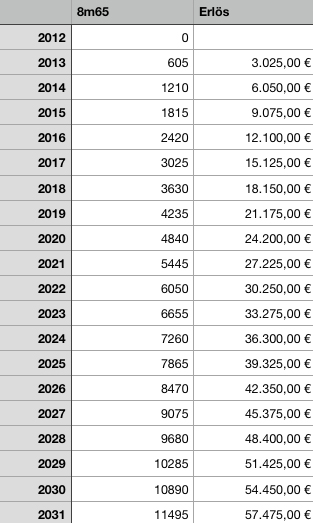
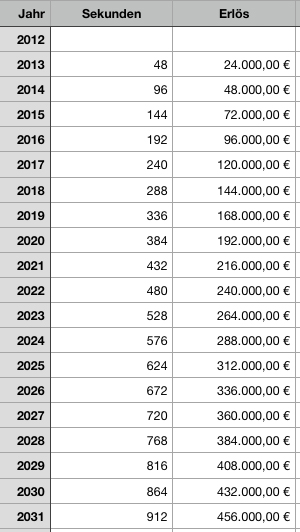
The whole HOWGOZIT until the end in 50-year increments
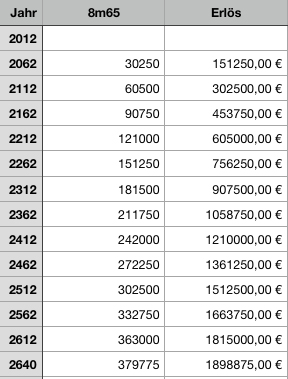
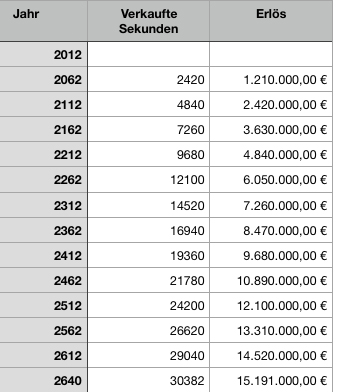
8m65 just a second
The whole HOWGOZIT until the end in 50-year increments